
Best Freeze Protection Valve for Livestock Troughs — Keep Water Flowing All Winter
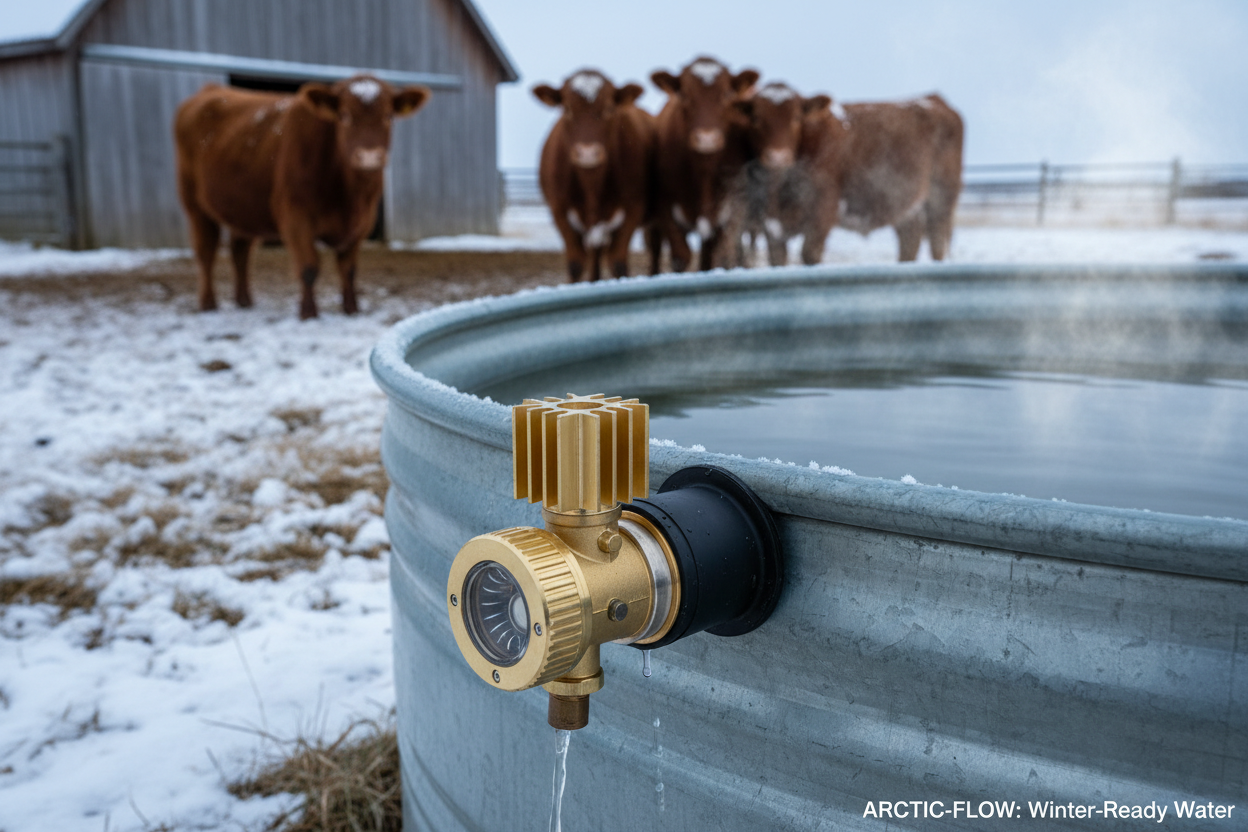
Winter weather poses a serious challenge for livestock owners: frozen troughs mean dehydrated animals, extra labor chopping ice, and potential health risks from inconsistent water access. Freeze prevention valves solve this by automatically maintaining water flow and preventing ice buildup without electricity or constant oversight.
Best Float Valve specializes in durable, American-made solutions for stock tanks and troughs, including the best freeze protection valve for outdoor pipes and livestock systems. This guide covers how these valves work, key features to prioritize, and proven picks to keep your herd hydrated through the coldest months.
Understanding Freeze Prevention Valves for Livestock
A freeze prevention valve is a thermal-sensing device that detects dropping water temperatures and releases small amounts of fresh water to prevent surface ice formation in troughs or pipes. Unlike constant-flow drippers that waste water or electric heaters that require power and pose safety risks, these valves operate intermittently based on precise temperature thresholds—typically activating around 41°F and shutting off at 42°F.
For livestock troughs, the valve attaches inline with a float valve system. As animals drink and water levels drop, the float opens the main supply; the freeze valve ensures no ice blocks access during freezes down to 18°F or lower in tested conditions. This makes them ideal for cattle, horses, sheep, and goats in open pastures or barns across the USA.
Why Livestock Troughs Freeze — And Why You Need Protection
Outdoor pipes and troughs freeze when surface water hits 32°F, but sub-surface flow can keep the tank viable longer. Factors like low livestock activity, wind chill, and prolonged cold snaps exacerbate the issue, leading to:
- Dehydration and reduced weight gain in animals
- Increased labor hauling water or breaking ice
- Pipe bursts from expansion if water stagnates
- Higher vet bills from stress-related illnesses
Freeze prevention valves address this efficiently: they use minimal water (far less than open faucets), require no adjustments, and fail-safe design ensures they default to open if needed. In real-world tests, tanks with these valves stayed open at 18°F while adjacent ones iced over. For ranchers in northern states like Minnesota or Montana, this means reliable access without daily intervention.
Explore Best Float Valve's full lineup of freeze protection valves tailored for livestock.
Key Features of the Best Freeze Protection Valve
Not all valves perform equally in harsh winters. Prioritize these for livestock troughs:
1. Thermal Precision and Efficiency
- Activates precisely at ice-forming temps (e.g., 41°F on, 42°F off) to conserve water.
- Intermittent flow prevents overflow while sweeping surface ice.
2. Durability and Materials
- Brass or stainless construction resists corrosion from minerals or livestock contact.
- No plastic parts that crack in cold; fully serviceable with replaceable components.
3. Compatibility and Ease of Install
- Threads for 1/4" or 1/8" lines; ports into standard float valves.
- Works with any trough (metal, poly, concrete, tire) and pressures up to 180 PSI.
4. No Power, Low Maintenance
- Mechanical operation—no electricity, timers, or batteries.
- Zero adjustments needed; factory-tested for reliability.
5. Proven Cold Weather Performance
- Handles sub-zero air temps if water source stays above activation point.
- Protects supply lines up to 150 feet.
Avoid cheap imports with inconsistent sensing or plastic housings. American-made options like those from Best Float Valve emphasize longevity and field-repairability.
Top Recommendation: Micro Sweeper Ice Preventer
The standout best freeze protection valve for outdoor pipes and troughs is the Micro Sweeper from Best Float Valve. This compact, mechanical bleeder attaches to ported float valves and uses pressurized water to intermittently flush the surface, keeping troughs open longer without waste.
Key specs:
- Turns on at 41°F, off at 42°F for precise control.
- Minimal water use—far less than constant drips.
- Compatible with all Best Float Valve kits; brass construction.
- Tested viable at 18°F in Virginia winters.
Users report no ice buildup even with low animal traffic, reducing daily chores significantly. Pair it with a high-volume float valve for ponds or large herds. Ready to equip your setup? View details in the freeze protection collection.
Installation Guide: Step-by-Step for Livestock Troughs
Proper setup ensures peak performance. Tools needed: pipe wrench, Teflon tape, ported float valve.
- Select Location: Install inline on the supply line to the trough, ideally under water level or insulated.
- Plumb the Micro Sweeper: Thread into the port on your float valve (1/4" or 1/8" NPT). Use tape for seal.
- Connect Supply: Attach incoming pipe/hose; ensure minimum pressure for operation.
- Test in Mild Cold: Monitor activation; adjust float height if overflow occurs.
- Insulate Exposed Lines: Use foam wraps for hose runs over 50 feet.
Full operation is automatic—no winter tweaks required. For visual demos, check product videos on the site. Start with Best Float Valve's home page for compatible kits.
Maintenance and Troubleshooting Tips
These valves are low-maintenance, but annual checks prevent issues:
- Inspect threads/seals pre-winter; replace washers if leaking.
- Flush lines if minerals clog (rare with full-flow design).
- In extreme -20°F, supplement with tank covers or aerators.
- No freezing inside valve due to constant water contact.
Longevity exceeds 5+ years with galvanized components. Stock spares for ports/nozzles.
Best Float Valve
- Phone: 859-878-2378
- American Made – Kentucky-based operations
- Email: will@bestfloatvalve.com
FAQs: Freeze Prevention Valves for Livestock
1. What is the best freeze protection valve for livestock troughs?
The Micro Sweeper stands out as the best freeze protection valve for outdoor pipes due to its precise thermal sensing, minimal water waste, and compatibility with stock tanks—no electricity needed.
2. How does a freeze prevention valve work without power?
It uses a thermal element in constant water contact: below 41°F, it opens to release a trickle; above 42°F, it closes. Fully mechanical and automatic.
3. Will it work in sub-zero temperatures?
Yes, down to tested 18°F air temps if water supply stays viable. Protects lines effectively; combine with insulation for extremes.
4. Does it waste water like a constant drip?
No—intermittent operation uses the least possible, preventing overflow while keeping surfaces clear.
5. Can I use it with any float valve?
Best with ported models like Best Float Valve's; adapts to 1/4" or 1/8" threads. Check compatibility for others.
Reliable Water All Winter Long
Investing in the best freeze protection valve like the Micro Sweeper ensures your livestock troughs stay operational, saving time, water, and animal health costs. With no power needs and durable USA construction, it's a smart upgrade for any farm facing freezes.
Browse trusted solutions at Best Float Valves


Please upload banner from store admin blog pages